
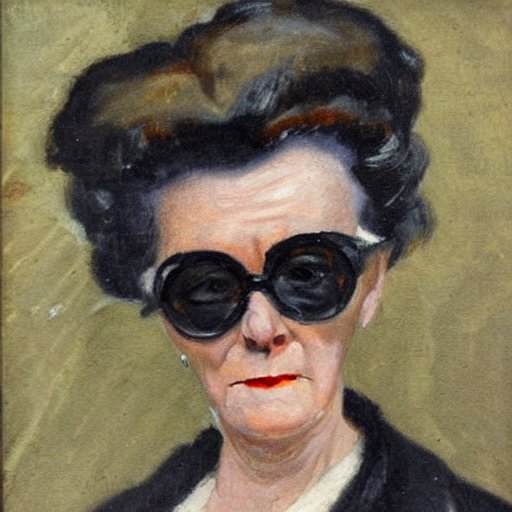
No one is quite sure of the origin of the Curenandefal family name. There is some talk of it being a corruption of Coromandel, a peninsula of New Zealand; itself named after a British Royal Navy vessel, originally called the Malabar, which stopped there in 1820 to purchase kauri spars. However, the derivation of Curenandefal from Coromandel would be so wild a corruption in so short a period as to cause serious-minded people alarm, and so as a theory, it is widely rejected. The ship itself derived its (second) name from the Coromandel Coast of India, so-called by seventeenth-century Dutch sailors who stopped at that place for water and who, with the characteristic carelessness of the coloniser, mispronounced the indigenous name, which was Karimanal. Karimanal was possibly derived from Karai Mandalam, meaning The Realm of the Shores, but here we stray too far.
Some contest that the secrets of the origin of the Curenandefal name lie in dissection and note the closeness of the second half, ‘andefal’, to the Portuguese ‘adelfa’, the feminine singular of ‘adelfo’, translated in English as ‘oleander’, the notoriously poisonous shrub. Lady Curenandefal is undoubtedly a singular female, and though perhaps secretly liking the idea of being notoriously poisonous, she has let it be known, in private circles, that she eschews the connection on account of the common English name for oleander being ‘dogbane’.
The Latin ‘Curia unde Fal’ sounds similar and, although grammatically incorrect, may hint at a Roman citizenry hailing from a village in South Khorasan, an area that forms part of modern-day Iran. Again, Lady Curenandefal cannot be swayed on this one. It is not that she disapproves of classical derivations, far from it, but she has always been a little wary of being too closely associated with geographies that fall outside London’s Belgravia; the Iranian Embassy is in Knightsbridge.
As a commentator, or compiler, or narrator of the circumstances surrounding the Curenandefal family, I feel I must, early on, declare an interest. Though I have been trained in impartiality through the various courses and degrees outlined in the foreword to this work, I feel it is judicious to inform the readership that my own family’s history has at times been inexorably linked to the Curenandefals, and not always for the good. In short, they ruined us. How this was achieved will, of necessity, form a not insignificant part of the narrative of this volume. As a precautionary measure and to attain the highest standards of impartiality, my text has been carefully reviewed by the editors so as to deliver into your hands a trustworthy and definitive work.
Philip closed the book and turned to his wife, who lay on the sun lounger beside his.
‘How’s your book?’ he asked.
‘Fine,’ she said without looking up. ‘Yours?’
‘Fine,’ he said. ‘A bit wordy, though. Shall I order some drinks?’
‘That’d be nice,’ she said. ‘Maybe a mango smoothie?’
‘Yep. I’ll press this button thingy.’
‘Doesn’t work,’ said his wife without looking up. ‘You’ll have to go to the booth.’
‘I’ll try it anyway,’ said Philip, and he pressed the button on the little WiFi remote on the little table that was supposed to summon someone from the hotel to take orders.
‘Look at that crack on the wall over there,’ said Philip. He was squinting at one of the hotel’s white walls on the other side of the swimming pool. ‘Is that a crack?’ he asked. His wife glanced up over her book.
‘What are you talking about?’ she asked.
‘There,’ he said, pointing, ‘between that balcony with the lady and the skinny palm tree.’
‘Don’t know,’ said his wife returning to her book.
‘It might be an expansion joint,’ he said. ‘It’s very straight.’ He continued to look at it. ‘Hey! Maybe it’s not a crack. Maybe it’s a long, thin, dark line of dried blood!’
‘Really?’ said his wife.
‘Yeah. Maybe up there on the roof, on the flat roof, where nobody ever goes, they do voodoo-type stuff, and that’s where the blood drains off. Maybe it was a condition for building the hotel – that voodoo stuff could happen on the roof.’
‘I don’t think so,’ said his wife.
Philip continued to contemplate the long dark line that ran all the way from the top of the building down four stories to an area of planting at the base of the wall.
‘Oh, I know!’ he continued, ‘Say it’s not voodoo. Say it’s the mafia. Say there’s this guy, and they bump him off, and they want to get rid of the body, and this hotel is being built, so the boss knows the foreman and one night, they dump the body in the foundation of the hotel and pour the cement on top, and then the rest of the hotel gets built. But that means there’s a weakness in the foundation, you see, where the body is, and one day the man’s skull cracks under the pressure, and that crack spreads all the way up the wall, and there it is.’
‘That’s a bit grim,’ said his wife. ‘Is that drink coming?’
‘I don’t think the button works. I’ll go,’ and he stood up, put his feet in his flip flops and, having taken a moment to feel less woozy in the heat, set off in the direction of the bar.
Philip and his wife, Marjory, are holidaying in Lanzarote. Their chosen hotel is in the south of the island and is rated four-star. This is their second visit to the same location. Their lives being ordinarily busy, they enjoy the chance to relax. Consequently, they take no advantage of the excellent opportunities for water sport afforded by the island’s climate, nor do they take much interest in the unique volcanic landscape. As to Philip’s speculations about the crack in the wall, these are, of course, nonsense. The crack is indeed an expansion joint, something he will see when he takes a stroll past the bar to inspect it. There is no formal history of voodoo in the Canary Islands, despite a strong Catholic tradition and their proximity to the west coast of Africa, and although ritual human sacrifice continues to be recorded south of the Sahara, the practice has yet to spread to Lanzarote. The idea of the mafia is less fanciful. It is known, for example, that the Rome-based ‘Banda della Magliana’ operate money laundering schemes in the Canaries. Again, however, Lanzarote seems to be free of such activity, and, in any case, as was said before, the crack is an expansion joint.
‘That crack is an expansion joint,’ said Philip, returning with a tray of drinks and nibbles.
‘Splendid,’ said Marjory, closing her book and sitting up a little to take her smoothie.
The unquestioning acceptance of the Curenandefal’s position near the top of our Edwardian Society relies in large part on the short-term memory of crowds and in small part on the current Lady Curenandefal herself, whose careful machinations, over a lifetime, have all but obscured the labyrinthine tracks of her family’s rise to prominence. So obscured are they, in fact, that it has not been without considerable effort that a rough history has indeed been compiled. Incomplete though this history may be, it serves to conclude that the Curenandefals have only enjoyed their current prominence for no more than the last four generations. Further back in time, behind these four vaunted generations lie murkier histories with more convoluted paths. Wending one’s way upon these paths, one meets quite an oddment of characters. There is, for example, the sixteenth-century master of Trinity College, Oxford, a Reverend Dr Ralph Kettle, noted at the time for his determined efforts, over many years, to extract sunlight from cucumbers. Also of note, a certain Francesca Egerton, whose vehemence in preferring the company of chickens over people, was manifested every evening at table, where she dined with six of her favourite hens. And what should we say of George Wellsit, the inventor of a miniature pistol for shooting wasps? Not much, other than it is no wonder the current Lady Curenandefal has made it her business to keep such skeletons firmly in their respective closets. Given that I here may have exhumed some for public view, it is my sincere hope that she is not too displeased.
‘When was this published?’ said Philip to himself, flicking to the front of the book. There he saw that the first edition had been published in 1904, that it had been included in Everyman’s Library in 1967 and that the volume he held had been printed in 1998. He looked at the front cover. A portrait of Lady Curenandefal stared back at him imperiously.
Philip glanced at his wife’s empty sun lounger on his right, empty of Marjory but still occupied by her abandoned paperback. It was the third day of their holiday, and already she had become restless for other company. He looked over to the left, and there she sat, at the side of the pool. She was talking to someone. Apparently sensing she was being watched, Marjory turned to look at him, and Philip had no time to pretend that he was absorbed in his reading before she beckoned. He sighed, put down his book and walked over to her.
‘This is my husband, Philip,’ said Marjory to the other lady who sat beside her at the pool’s edge.
‘Pleased to meetcha,’ said the other lady in a strong Cockney, ‘I’m Stacey. What’s that book you’ve been reading, Philip?’
‘Oh, it’s not much, really,’ said Philip. ‘I picked it up from the book-swap shelf, over beside the bar.’
‘You’re lucky,’ said Stacey. ‘I looked for a book there yesterday, but they were all in German! Is that one any good?’
‘It’s a bit wordy, but I’m enjoying it,’ said Philip. ‘It’s the history of a London family.’
‘Oh, I love history and London’s proper riddled with it. It’s amazing; honestly, I swear, every street has had something going on,’ she effused. ‘What family is it about then?’
‘They’re called the Curenandefals?’ said Philip, inflecting the end of the word upwards.
‘Oi, Geoff!’ shouted the seated Stacey, ‘Do we know any Currentandyfulls in London? That’s my husband, Geoff,’ she said, gesturing to a man in shorts sitting on a lounger. He had a tattoo of a bulldog on his chest.
‘What you on about now?’ he barked back.
‘Don’t be so rude! Come over here and say hi to Philip and Marjory.’ said Stacey. Geoff stood up and was making his way over when a young boy hurtled past, slapped him on the leg and then bombed into the pool.
‘Oi, no running!’ shouted Geoff at the boy who was still below the water’s surface. Now Geoff was closer, Philip could see that the tattoo was not of a bulldog but was an attempted portrait of the boy.
‘Hi, I’m Geoff,’ said Geoff extending a hand. ‘What you on about, babe?’
‘Tell us the name of that family you is reading about again, Philip,’ said Stacey.
‘It’s the Curenandefals,’ said Philip. ‘They lived in Belgravia.’
‘Never heard of them,’ said Geoff.
‘No, it’s not that interesting, really,’ said Philip, and he turned to watch the boy in the water. What the boy was doing couldn’t be called swimming. Devoid of technique, he was attempting mastery over the element by the application of sheer force alone. The measure of his success was that he managed to keep his nose above the surface of the water more often than not.
‘Look at him,’ said Geoff, pointing. ‘Proper makes me laugh!’
‘Am I doing it, dad?’ the boy managed to shout mid thrashing.
‘Nah! It’s rubbish!’ laughed Geoff.
‘You’re doing it wonderful, babe,’ said Stacey to her son. ‘Don’t listen to him!’
‘He’ll get it eventually,’ said Geoff to Philip, “cos he can’t drown, him.’
‘He can’t drown?’ said Philip.
‘No, he can’t drown in water because of how he was born.’
‘Because of how he was born?’ parroted Philip.
‘Yeah. When he was born, right, you wouldn’t believe it, he was still in his sack!’
‘In his sack?’ said Philip with genuine shock.
‘Yeah! It was like something out of Alien!’ laughed Geoff. ‘Cor, you ought to have seen it!’
‘Sright,’ said Stacey, responding to Marjory’s shocked expression. ‘So there I am, on the slab right, a heaving and a puffing and cor blimey I thought like I was gonna split in half! So I’m busying away right, and I looked up, just glanced up, and on my life, him – suddenly he’s looking like he’s watching some sort of horror film! Before, he was all like, ‘Come on, dahlin’! You’re doing amazin’!’ and all that, but he’s standing there white as a sheet, and then all of a sudden it’s like popwoosh, and I’ve gone and given birth, at last. But then them nurses, them midwives, they’re suddenly all busy and looking proper shocked and all, and I’m that knackered and the room’s spinning as it is, what with the gas and air, and they’re saying, ‘Well, well! This is a first!’ So, I summons it up and says, ‘What is it? What’s the matter?’ and him, he says, ‘Babe! The baby’s still in its bag! You’ve squeezed the whole thing out in a one-er!”
The particular birth phenomenon that Stacey is describing, when a baby is born inside an intact amniotic sac, is referred to in medicine as an ‘en caul birth’. Caul refers to the part of the sac covering the baby’s head. Due, perhaps, to the rarity of such births (fewer than one in 80,000), its occurrence has attracted a certain amount of superstition. The most common and persistent belief is that those born ‘en caul’ are immune from drowning. As a result of this belief, cauls were once highly prized by sailors and were traded for large sums of money right up until the eighteenth century. There is no evidence at all, however, that those who are born ‘en caul’ are protected in any way whatsoever from death by drowning.
Philip and Marjory were back on their loungers again. It was mid-afternoon, and they were well positioned for sunshine, the other side of the pool being in shadow.
‘They sell flowers,’ said Marjory.
‘What, Stacey and Geoff?’ said Philip, genuinely surprised.
‘Yes. They have a flower stall at the new Covent Garden,’ said Marjory.
‘I would never have guessed they were florists,’ said Philip. ‘I’ve been to Covent Garden. Where’s the new Covent Garden?’
‘I don’t know,’ said Marjory. ‘We should go to London sometime; I haven’t been since I was a child.’
‘I’ve never heard of that birth thing before, have you?’ asked Philip.
Marjory laughed. ‘No! Sounds horrendous!’
‘And that kid can’t swim,’ said Philip. ‘I don’t think I’d trust an old wives’ tale to keep my child from drowning.’
‘He’ll be fine,’ said Marjory. ‘Some kids are just robust; you can tell just by looking at them.’
‘Do you think our kids would be robust?’ asked Philip.
‘You and me?’ Marjory laughed. ‘I doubt it!’ she said. Philip turned from looking at his wife and found himself studying the afternoon light reflecting off the surface of the pool.
The history of the modern and socially powerful Curenandefals begins to take shape around the time of the invention of the piano-forte, a date difficult to place precisely, but one which most scholars believe teeters either side of the year 1700. Invented by Bartolomeo Cristofori, an Italian, the instrument was initially called the ‘clavicembalo col piano e forte’; literally, ‘harpsichord with gentle and loud’. This was, of course, pruned fairly quickly to the now common name, ‘piano-forte’. Although physically resembling a harpsichord, the piano-forte’s true ancestor is the dulcimer in that both of these instruments are played by striking the strings, whereas, in the harpsichord, the strings are plucked. History has proven that the striking of strings is much preferred to the plucking. Indeed a rising star in the world of the orchestra, who shall remain nameless, has dismissed the sound of the harpsichord as evocative of two skeletons copulating on a tin roof in a thunderstorm. Though we may have strayed somewhat from the Curenandefals in this short account of the piano-forte, the attentive reader will note, in sections hereafter, a significance in the progression from plucking to striking.
After dinner, Marjory and Philip were up on the third floor of the hotel, in the Piano Bar. A long balconied terrace afforded a view that encompassed the pool area below, the beach beyond, the sea beyond that and finally, the neighbouring island of Fuerteventura. The scent of honeysuckle mixed with the smell of the warm earth and was carried on a soft breeze into and around the terrace. The pool area was empty and quiet, save for the attendants who were straightening sun loungers, removing towels, and cleaning the pool with long pipes and poles, erasing all signs of the day’s activity. Arriving over the ocean from out of a darkening blue haze, the last ferry from Fuerteventura sounded its deep, sonorous horn, a sound that, whilst perfunctory, seemed yet a fitting herald for the end of the day. Above all, the dome of the sky was awash with pastels overlaid with ribbons of peach and orange as the sun slipped down in the west.
Philip was leaning on the balcony gazing out into the distance. He was studying the hotel. He could see the expansion joint and the flat roof. No, he thought to himself, you can’t see what’s up there from anywhere. He imagined dark deeds. Victims bound and gagged. Quiet knives flashing moonlight. Arching and straining and writhing, and bulging eyes. Strong forces advancing panther-like, implacable, ruthless, inexorable.
‘Here’s your drink,’ said Marjory, handing him a tall mojito.
‘Thanks,’ he said, taking the glass and shifting to lean on the balcony with one elbow. Just as he did so, there was a call over his wife’s shoulder, and there were Geoff and Stacey with their young boy, sitting on armchairs around a low coffee table.
‘D’you want to come and join us?’ called Stacey, and without upon Philip’s face the merest hint of this being anything other than a splendid idea, he and Marjory joined them at their table. The young boy was kneeling on the floor, busy with some sort of card game to do with footballers and did not register their arrival.
‘Blimey, ain’tcha glad it’s a bit less hot, Marjory! I hate being all sweaty and sticky!’ said Stacey pulling her white cotton top to and fro delicately to aid the movement of air.
‘Oh no!’ said Marjory. ‘I love the heat. But not if it’s too hot.’
‘Look at him,’ said Stacey pointing at Geoff. ‘It’s like I’ve gone and got married to a tomato-man!’ Sure enough, now that Geoff was out of the sunlight and sporting a white shirt, his skin did seem remarkably red.
‘Can’t help it,’ said Geoff flatly. ‘It’s not sunburn, really; it’s just I go red rather than brown.’
‘I don’t go brown either,’ said Marjory. ‘I just get more freckles.’
‘Yeah, but you’ve got beautiful clear pale skin,’ said Stacey. ‘Look at mine, all blotchy.’ Philip did not comment. ‘What’s that you’re drinking, Philip? I bet it’s a mojito!’ said Stacey.
‘Yes! It is!’ said Philip, lifting the glass.
‘Wasn’t that Hemingway’s favourite drink?’ asked Stacey.
‘Yes, I think it was,’ said Philip.
‘Bet you didn’t think someone like me would’ve known about Hemingway, did you, Philip!’ japed Stacey. Philip blushed and muttered some demurring remark.
‘Oh yeah?’ piped up Geoff. ‘Go on then, Stacey. What do you know about Hemingway, other than he drank mojitos?’
‘Hark at him!’ said Stacey, rising to the challenge. ‘Well, I know that he was a writer, and that when he was little, his mum used to dress him in girl’s clothes, and that he hunted wildlife in Africa. So there!’ Stacey sat back in her chair triumphantly. Geoff shrugged.
‘Talking of hunting wildlife,’ said Stacey, suddenly pulling out her mobile phone and swiping at the screen, ‘have a look at my living room.’ Grinning, she turned the screen to Marjory, and Marjory leaned forward, squinting to see it better.
‘Is that a zebra behind the sofa?’ said Marjory, shocked.
‘Yeah! It’s stuffed. I collect taxidermied animals.’
Philip looked at Geoff. ‘She does,’ said Geoff. ‘She’s mad. The whole house is full of stuffed animals. We’ve got that zebra in the living room, and you can’t see it, but there’s a flamingo in there an’ all. She’s got parrots in the dining room, on the lamps, and we’ve got three flipping monkeys in our bedroom! Three! You try getting to sleep with them monkeys staring atcha! Gives me the willies.’
‘As long as it stops you giving me the willies!’ announced Stacey, and they all laughed. ‘I’m on a waiting list to get a baby giraffe for the bottom of the stairs,’ she continued. ‘They’re not killed or nothing like that. They all die of natural causes, so you’ve got to wait.’
Both Marjory and Philip were quite out of their depth in this conversation, which suited Stacey and Geoff, and so, with little deviation from these roles, they all spent quite a pleasant evening together.
Philip and Stacey’s assertion that Hemingway’s favourite drink was the mojito is actually unfounded. It is claimed that Hemingway drank mojitos at ‘La Bodeguita del Medio’ in Havana, Cuba, and indeed in that establishment, there is a plaque on the wall to this effect. However, there is no evidence whatsoever in any of his writing for asserting this claim; no reference to ‘La Bodeguita’ and no reference to drinking mojito. That he was a writer and a hunter and that, as a child, he was often dressed as a girl is not disputed.
Returning to our subject: as stated before, the rise of Curenandefals begins around the year 1700. Records, unearthed by myself, list a certain Thomas Pallant, direct line ancestor of the Curenandefals, as a farm labourer on an estate in Suffolk, just north of Bury St Edmunds. Apart from this one reference in a ledger, and the formal parish records, no other evidence of his life exists. Local folklore, however, endows the name with an event of some magnitude. The story goes that Thomas Pallant, whilst working on the estate, happened upon the estate owner’s wife and another worker in clandestine and carnal embrace. Having remained unseen by the illicit lovers, he kept this knowledge to himself, as a miser might keep a happened-upon penny.
When, several months later, the owner’s wife had started to swell, Thomas picked a ripe moment to speak with the estate owner about what he had seen. Initially, the owner was furious, of course, but Thomas had timed the situation well, for the owner had been nursing doubts of his own. The owner then approached Thomas with a plan to do away with his wife’s paramour. The plan ran thus: Thomas was to go into one of the barns and remove a goodly sized beam from the roof. He was then to sit down upon a stool within the barn and busy himself with the plucking of chickens. The owner would then instruct the unwary lover to join Thomas in the task of the plucking. Within the barn, on the right spot, Thomas was to leap up, cudgel the man to death and so arrange the body as to make it look like he had been felled by a falling beam. All went according to plan. The estate owner’s wife suspected foul play but kept her peace. Thomas, however, was now endowed with the requisite knowledge to enact blackmail upon the owners and was bold enough to do it. As the editors are wont to point out, this is all, of course, hearsay and may only be the product of idle tittle-tattle. However, perhaps it goes some way to explain why, over the next few decades, the Suffolk estate slips away from the Tomes family (my own) and unto the various Pallant descendants of Thomas.
‘So what’s your book about?’ asked Philip as he lay beside his wife, reading in bed.
‘It’s trash, really,’ said Marjory. ‘I always read trash on holiday.’
‘I bet it’s all marital breakdown and infidelity and family feuding,’ said Philip. Marjory nodded without lifting her eyes from her book. ‘Mine too,’ said Philip. He lay listening. He could hear air conditioning and footsteps in the tiled corridor outside, and, far away, he could just make out the piano being played in the bar on the third floor. He lifted his book and looked at the figure of Lady Curenandefal on the cover. ‘Good night, m’Lady,’ he said and placed the book on his bedside table. A breeze agitated the long, delicate, muslin curtains for a moment. They filled out, fat and swollen and then the breeze passed, and they returned to hang limp.
‘Do you think we’ll have kids?’ asked Philip. Marjory shrugged. ‘Imagine having stuffed monkeys in your bedroom!’ laughed Philip, and he placed his forearm over his eyes and chuckled for a bit. Again he lay still, arm across his eyes, listening carefully to the world outside.
‘Why do you whisper, green grass, why tell the trees it ain’t so …’ a man was singing at the piano far away. ‘Whispering grass the trees don’t have to know, no, no …’ Philip knew the gentle song and hummed along a little. ‘Why tell them all your secrets? Who kissed there long ago? Whispering grass, the trees don’t need to know ….’
Philip listened till the end of the song. He heard a quiet clapping, and then the piano began another ornately modulated introduction. He moved his arm and opened his eyes, but he was in darkness. The light had been turned off, and Marjory had turned over and was asleep.
 West Folio